
Technique & materials
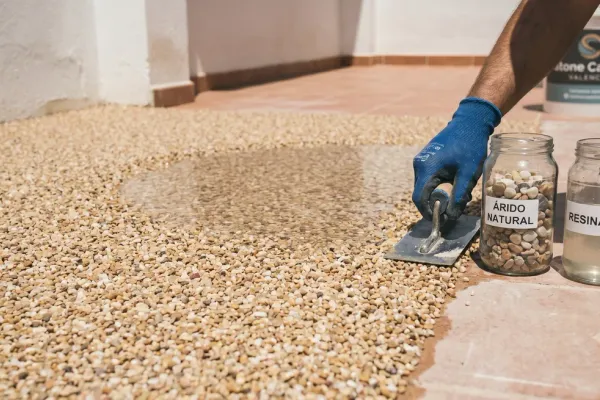
What stone carpet is and what it is made of
Stone carpet, also known as resin bound gravel: what it is, what it is made of (aggregate + resin) and why it drains. Explained by specialists in Valencia.
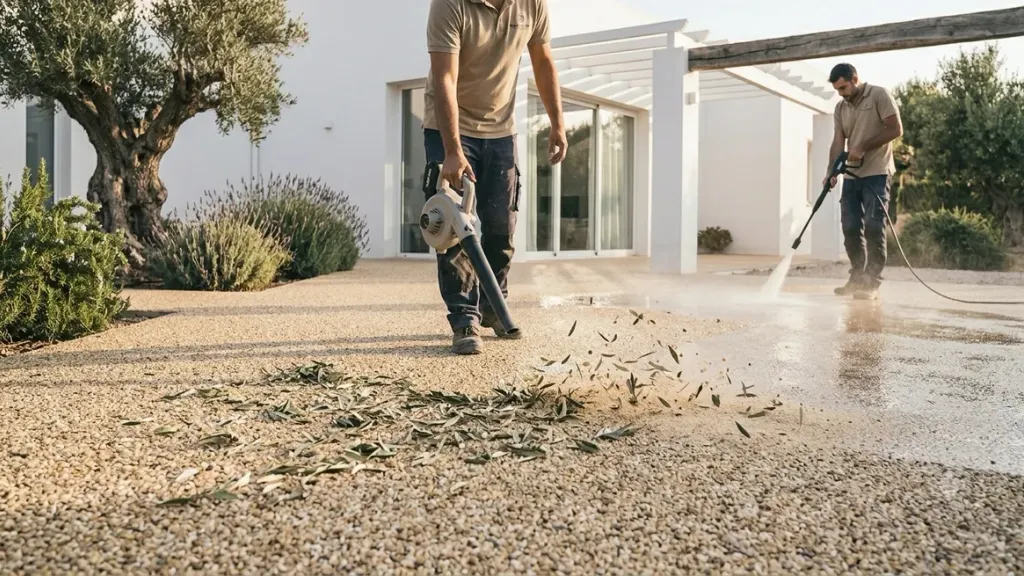
One of the questions we are most often asked before signing up is: “and how do I maintain it afterwards?”. The short answer is that stone carpet (or resin bound gravel) asks for little: being a seamless, permeable surface, it has no joints for dirt to gather in and it does not hold water on top. But “little maintenance” is not “none”, and doing it well —with the right method— is what separates a floor that stays like new from one that looks tired before its time. Here we explain how to clean it, what to avoid, how long it lasts and whether it can be repaired.
Routine cleaning is simple and needs no special products:
As the surface is permeable, the cleaning water seeps through the surface itself rather than sitting in puddles.
This is the part that really matters, because almost all avoidable damage comes from cleaning badly:
Durability depends on two things: the quality of the materials (above all the resin) and the quality of the application (the substrate preparation). The same aggregate lasts for years or comes away depending on how the floor underneath was prepared.
In the Valencian outdoors, the three factors that test the surface are:
Market guidance (this is not our guarantee): manufacturers and installers of resin bound gravel place the service life of the system at around 20–30 years or more under suitable conditions. It is a general industry reference; the actual lifespan depends on the product and the specific workmanship.
One of the practical advantages of the system over tiling: as it is an aggregate-and-resin surface worked on site, a specific damaged area (a knock, a patch that has come away) can be treated on the area itself without having to redo the whole floor, unlike a broken tile that forces you to find a matching piece. The technical challenge is getting the patch to match the colour and texture of the rest, which ages with the sun; the sooner it is done and with the same aggregate, the better it blends.
Being a seamless surface there are no joints for moss to gather in as in tiling. Besides, because it drains and the water does not sit on top, there is less permanent moisture on the surface, which is what feeds moss. Regular sweeping and cleaning keep it at bay.
The colour is that of the natural aggregate, not a coat of paint that fades as in stamped concrete, so it does not depend on a sealer to keep its look. If the system has a protective surface finish, it may be worth refreshing it from time to time.
It depends on the resin. Aliphatic resins are cited in the industry as UV-stable and do not yellow; basic ones can yellow. That is why we always ask about the type of resin before comparing prices. We also cover it in stone carpet vs stamped concrete.
It is one of the environments it is routinely used for; the specific resistance depends on the resin. We look at it in the best paving for a pool edge.
Over time, leaves and grit can clog part of the pores. Regular maintenance (sweeping and cleaning with water) keeps them open and preserves the drainage capacity.
Got a pool or patio in mind? Let’s talk and we will explain, without the spin, how it is maintained in your case. Tell us about your project.
Stone carpet, also known as resin bound gravel: what it is, what it is made of (aggregate + resin) and why it drains. Explained by specialists in Valencia.
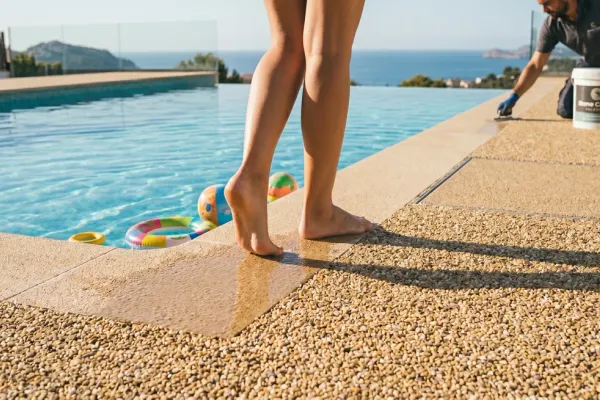
We compare the options for a pool edge (stamped concrete, porcelain, marble, stone carpet) on drainage, temperature and safety. An honest guide.
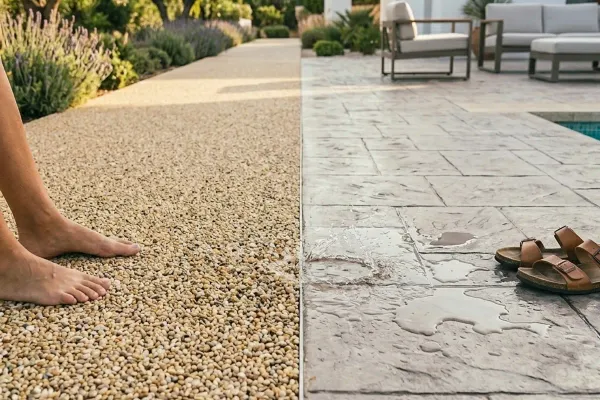
The real differences between stone carpet and stamped concrete: drainage, temperature, joints, maintenance and building work. We help you decide without the sales pitch.