
Technique & materials
What stone carpet is and what it is made of
Stone carpet, also known as resin bound gravel: what it is, what it is made of (aggregate + resin) and why it drains. Explained by specialists in Valencia.
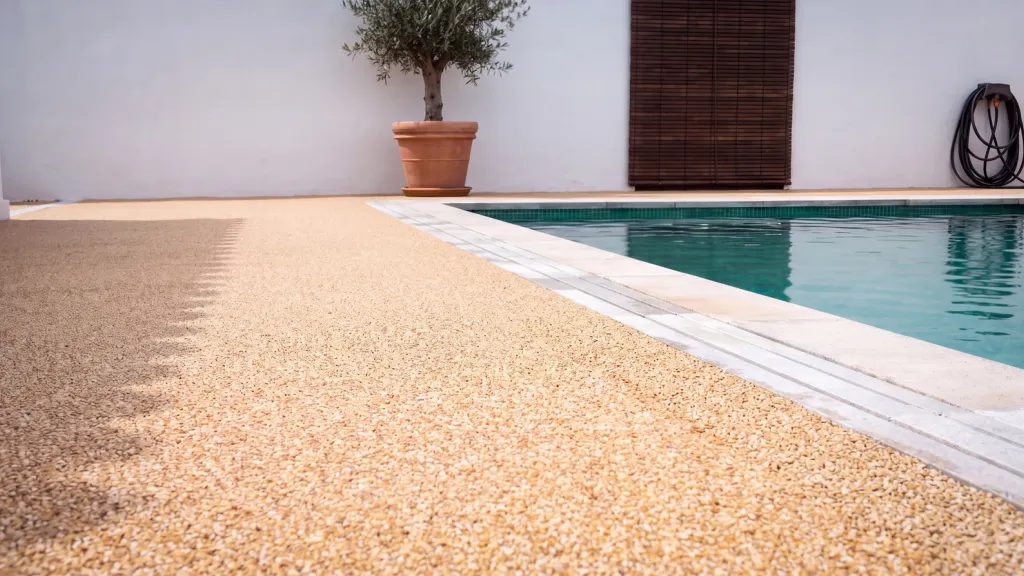
A pool edge is the most demanding spot in any home: constant water, direct sun, bare feet and a wet floor, all at once. A surface that works in a living room can be a serious problem here. Before choosing, it is worth being clear about what you really need from the floor that surrounds the water, and then weighing each option against those criteria rather than being swayed by the photo alone.
Four requirements, in their real order of importance when you use it:
From here on, it is all about comparing options against these four points.
The four most common alternatives for a pool edge in Valencia, head to head:
| Criterion | Stamped concrete | Porcelain stoneware | Natural stone / marble | Stone carpet |
|---|---|---|---|---|
| Drainage | Impermeable (runs off by fall) | Only through the joints | Impermeable (runs off by fall) | Drains through the material itself |
| Temperature in the sun | Heats up, especially in dark tones | Variable by piece and colour | High in dark tones; light marble less so | Does not store heat: porous, light-toned aggregate |
| Non-slip when wet | Depends on the mould and the sealer | Depends on the slip rating of the piece (R-class) | Variable; some finishes are slippery | Yes, thanks to the exposed aggregate texture |
| Joints | Few (expansion joints) | Many | Many | Seamless, no joints |
| Maintenance | Periodic resealing (every few years) | Joint cleaning, possible moss | Sealing and cleaning | Sweeping and water; no joints |
| Building work | Requires a concrete base | Requires laying piece by piece | Requires laying piece by piece | Often over the existing substrate |
| Look | Printed imitation (stone, wood) | Catalogue of pieces | Real stone, premium range | Continuous natural aggregate, made-to-measure colour |
The characteristics in the table are those the industry generally attributes to each system; the actual behaviour depends on the quality of the product and, above all, on the workmanship. For the detailed comparison with the most common option, see stone carpet vs stamped concrete.
It is the only one of the four that solves the two most critical demands of the edge at the same time:
On top of that, it is seamless, with no joints, so there are no lines for dirt to gather in or moss to grow in, and maintenance comes down to sweeping and rinsing with water. And because its texture is that of the aggregate itself, it offers grip even when the floor is wet. You can see the detail in the applications section.
Honesty builds more trust than claiming something works for everything. Stone carpet is not the automatic answer in these cases:
No: the surface has the texture of the exposed aggregate, which provides grip even when the floor is wet. That is exactly the scenario it is designed for —around water— where other smooth surfaces do slip.
Light-toned natural aggregate does not store heat like concrete or dark stone, so it is one of the most comfortable surfaces to walk on barefoot in summer. The light tone helps: the darker the floor, the more it heats up, whatever the material.
In many cases yes, over the existing substrate, if it is sound and free of damp. It depends on the state of the floor: we assess it on the visit. The same principle applies to renovating a patio without building works.
It is one of the environments this system is routinely used for in the industry. The actual resistance to chlorine and salts depends on the type of resin.
It depends on the metres, the state of the substrate and the chosen aggregate. We explain it in how much a stone carpet costs per m².
Got a pool in mind? Let’s talk and we will tell you honestly what your edge needs. Ask for a no-obligation quote.
Stone carpet, also known as resin bound gravel: what it is, what it is made of (aggregate + resin) and why it drains. Explained by specialists in Valencia.
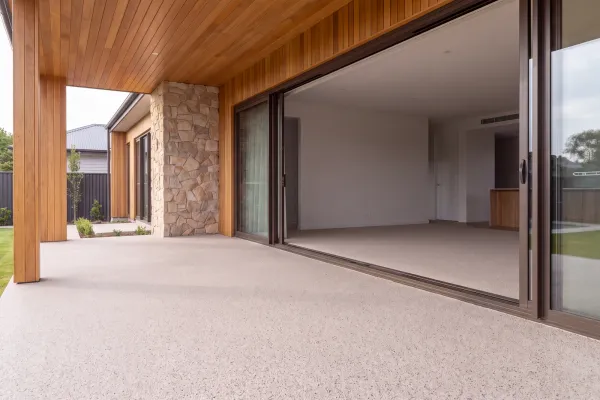
The real differences between stone carpet and stamped concrete: drainage, temperature, joints, maintenance and building work. We help you decide without the sales pitch.
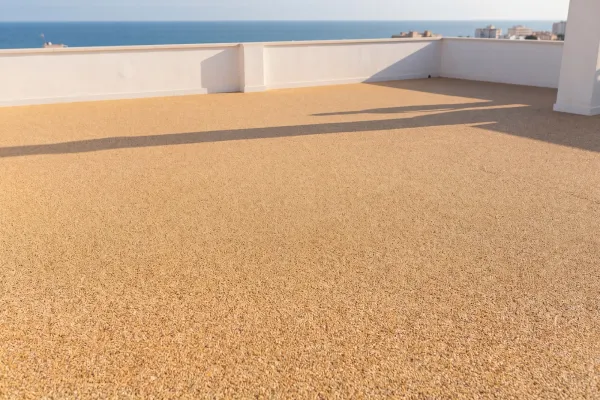
What influences the price of stone carpet per m²: total m², aggregate colour, state of the substrate and access. An honest guide to give you an idea before the quote.