
Technique & materials
What stone carpet is and what it is made of
Stone carpet, also known as resin bound gravel: what it is, what it is made of (aggregate + resin) and why it drains. Explained by specialists in Valencia.
You have a patio with cracked or faded tiles, but the mere idea of breaking up the floor —rubble, days of works, dust all over the house— puts you off. It is the reason so many people put up with a patio they no longer like. Stone carpet (or resin bound gravel) solves exactly that: in many cases it is applied over the floor you already have, without lifting it. Here we explain when it is possible, when it is not, and what you gain compared with starting from scratch.
Lifting an existing tiled floor is the expensive, slow part of a patio renovation. You have to break up the tiles, remove the rubble (which is heavy and costly to manage), repair whatever appears underneath and re-tile. Weeks of works, dust and a budget that spirals. That is why many patios still have tiles from the eighties or porcelain that is slippery and heats up: the cost of changing it does not justify the result.
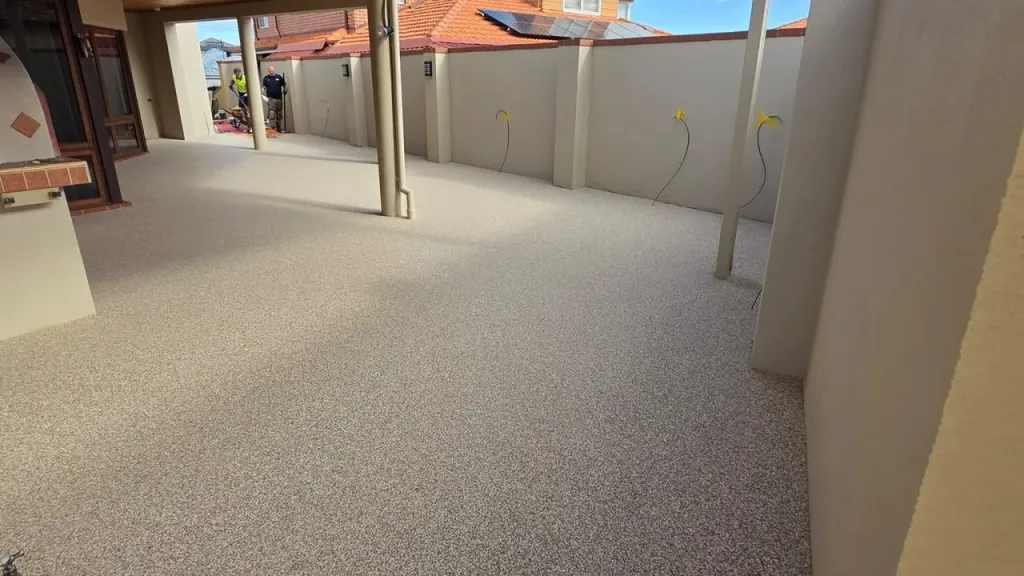
Stone carpet is applied over your current floor —tile, porcelain, terrazzo or concrete— when the substrate is in a condition to receive it. Instead of removing the old, it is prepared, primed and the aggregate is spread with resin on top, forming a new, seamless, permeable surface without touching the structure.
The key is that the substrate be suitable. Broadly, the industry requires the existing floor to be:
| Your patio’s situation | Can it be applied on top? |
|---|---|
| Old tiles but sound and well stuck | Yes, usually an ideal substrate |
| Porcelain that is slippery or heats up, in good condition | Yes, applied on top to gain grip and comfort |
| Sound concrete or terrazzo | Yes, a common substrate |
| The odd loose tile or isolated crack | Usually yes, repairing that area first |
| Hollow tiles across much of the surface | Not directly: the affected area has to be made good or broken up |
| Active damp underneath | No, until the source of the damp is resolved |
| A floor with no fall or drain at all | The fall has to be corrected first |
Beyond avoiding the building works, the finish itself fits a Valencian patio very well:
You can see the detail in the applications section and understand the technical why in what stone carpet is.
Applying over the existing floor is not magic: if the substrate fails, the new surface inherits the problem. You have to act first when there are hollow or loose tiles across much of the surface, active cracks, unresolved damp or a total lack of fall. In those cases the affected area is made good, repaired or, if there is no other way, broken up before applying. We would rather tell you so on the visit even if it means more work: applying over a bad substrate is throwing money away.
A renovation without lifting the floor is, by definition, faster than breaking up and re-tiling, because you save the demolition and the rubble removal. The actual time depends on the area, the state of the substrate and the curing times of the resin between stages. We do not give a fixed number because every patio is different.
In many cases no: if the floor is sound, free of damp and well bonded, it is applied on top. It is only broken up when the substrate is not in good condition. We confirm it on the visit.
Less than a renovation with demolition, but it depends on the metres, the state of the substrate and the curing times between coats.
The system is a thin layer of aggregate and resin, far less than adding a new slab and tiles, so the change in level is small.
Yes: as it drains and does not hold water, it copes well with frost, and stability in the sun depends on the type of resin (aliphatic ones do not yellow).
Yes: the colour and grain size of the aggregate are chosen according to the finish you want, within the available range.
Yes, it is one of its star uses. We look at it in the best paving for a pool edge and in the applications section.
Give your patio a new life without building works. Tell us what your current floor is like and we will tell you honestly whether it can be applied on top. Tell us what it is like.
Stone carpet, also known as resin bound gravel: what it is, what it is made of (aggregate + resin) and why it drains. Explained by specialists in Valencia.
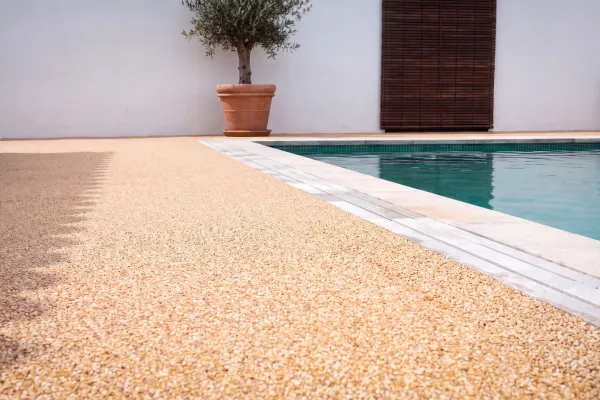
We compare the options for a pool edge (stamped concrete, porcelain, marble, stone carpet) on drainage, temperature and safety. An honest guide.
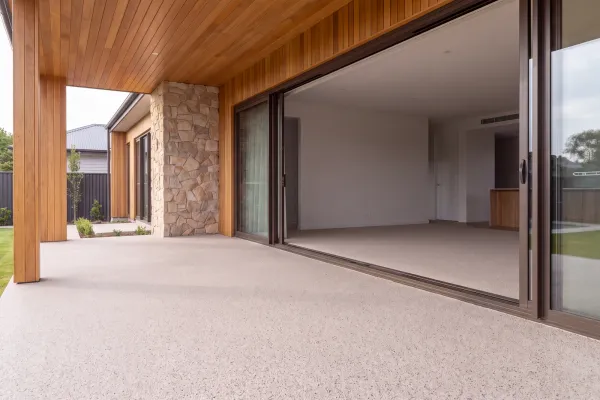
The real differences between stone carpet and stamped concrete: drainage, temperature, joints, maintenance and building work. We help you decide without the sales pitch.